Please ensure Javascript is enabled for purposes of website accessibility Discover the FutureLegacy range of multi-asset funds at BNY Investments - UK - BNY Investments
uk
en
intermediary
intermediary
false
true
Gathering data
Disclaimer Not Available

DISCOVER
THE
FUTURELEGACY 
MULTI-ASSET RANGE

A dynamic approach to investing for and in retirement.

INTRODUCING

FutureLegacy


FutureLegacy is a range of five risk-targeted multi-asset funds
that through the expertise at Newton Investment Management
aim to help clients achieve their long-term goals investing for
and during their retirement.

dynamic-planner

Managed to remain within the Dynamic Planner volatility bands 3-7, the BNY Investments FutureLegacy
funds enable advisers to recommend a solution whichaims to meet the needs, risk appetite
and expectations of their client, identified as part of their advice process.


Actively Managed

Actively managed by a dedicated team at Newton to manage volatility and take advantage of timely investment opportunities, drawing on the best ideas and expertise across the firm


Global sustainable investment framework

The funds look to invest globally for a fully diversified approach regardless of geography or sector. Drawing on Newton’s longstanding sustainable investment framework, the funds invest at least 70% of their portfolios in corporate and sovereign securities which demonstrate positive environmental and/or social characteristics.


Directly Invested

Providing investment flexibility to seek out opportunities to invest as well as transparency in costs.

BNY Mellon FutureLegacy range

Newton offers a choice of multi-asset solutions to meet investors’ risk appetite.

Equity

Fixed income

Cash

Objective: To achieve capital growth and potential for income over the long term (5 years or more) while being managed to a pre-defined level of risk. The Fund will aim to maintain a risk profile classification of 3 from a scale of 1 (lowest) to 10 (highest) which is assessed against the risk ratings scale provided by an external third-party risk rating agency.

Benchmark: Investment Association’s Mixed Investment 0-35% Shares Sector Average. The Sub-Fund is actively managed without benchmark-related constraints.As the Sub-Fund is managed to a pre-defined level of risk, the ACD considers there to be no benchmark against which the Sub-Fund’s performance can be appropriately compared. However, investors may wish to compare the performance of the Sub-Fund against the InvestmentAssociation’s Mixed Investment 0-35% Shares Sector Average as this includes a broad representation of funds with similar levels of equity and bond exposure.
Objective: To achieve capital growth and potential for income over the long term (5 years or more) while being managed to a pre-defined level of risk. The Fund will aim to maintain a risk profile classification of 4 from a scale of 1 (lowest) to 10 (highest) which is assessed against the riskratings scale provided by an external third-party risk rating agency.

Benchmark: This fund is actively managed without benchmark-related constraints. The Fund uses a composite index, comprising 10% SONIA GBP, 45% BAML Global Broad Index GBP Hedged and 45% MSCI ACWI GBP NR as a point of reference (comparator) against which the ACD invites Shareholders to compare the Fund’s performance. The ACD considers the composite index to be an appropriate comparator because it includes a broad representation of the asset classes, sectors and geographical areas in which the Fund predominantly invests.
Objective: To achieve capital growth and potential for income over the long term (5 years or more) while being managed to a pre-defined level of risk. The Fund will aim to maintain a risk profile classification of 5 from a scale of 1 (lowest) to 10 (highest) which is assessed against the risk ratings scale provided by an external third-party risk rating agency.

Benchmark: This fund is actively managed without benchmark-related constraints. The Fund uses a composite index, comprising 5% SONIA GBP, 35% BAML Global Broad Index GBP Hedged and 60% MSCI ACWI GBP NR as a point of reference (comparator) against which the ACD invites Shareholders to compare the Fund’s performance. The ACD considers the composite index to be an appropriate comparator because it includes a broad representation of the asset classes, sectors and geographical areas in which the Fund predominantly invests.
Objective: To achieve capital growth and potential for income over the long term (5 years or more) while being managed to a pre-defined level of risk. The Fund will aim to maintain a risk profile classification of 6 from a scale of 1 (lowest) to 10 (highest) which is assessed against the risk ratings scale provided by an external third-party risk rating agency

Benchmark: This fund is actively managed without benchmark-related constraints. The Fund uses a composite index, comprising 25% BAML Global Broad Index GBP Hedged and 75% MSCI ACWI GBP NR as a point of reference (comparator) against which the ACD invites Shareholders to compare the Fund’s performance. The ACD considers the composite index to be an appropriate comparator because it includes a broad representation of the asset classes, sectors and geographical areas in which the Fund predominantly invests.
Objective: To achieve capital growth and potential for income over the long term (5 years or more) while being managed to a pre-defined level of risk. The Fund will aim to maintain a risk profile classification of 7 from a scale of 1 (lowest) to 10 (highest) which is assessed against the riskratings scale provided by an external third-party risk rating agency.

Benchmark: This fund is actively managed without benchmark-related constraints. The Fund uses a composite index, comprising 10% BAML Global Broad Index GBP Hedged and 90% MSCI ACWI GBP NR as a point of reference (comparator) against which the ACD invites Shareholders to compare the Fund’s performance. The ACD considers the composite index to be an appropriate comparator because it includes a broad representation of the asset classes, sectors and geographical areas in which the Fund predominantly invests.
FutureLegacy 3
FutureLegacy 4
Target Volatility Band
FutureLegacy 5
Target Volatility Band
FutureLegacy 6
Target Volatility Band
FutureLegacy 7
Target Volatility Band

Note: EMD = emerging markets debt, IG= investment grade


Cash & Others includes Cash and Derivatives.


Source: Newton, 31 December 2025. Pie charts illustrate the long-term strategic asset allocation breakdown of equities and bonds. Total may not sum to 100% due to rounding.


The BNY Mellon FutureLegacy funds are actively managed typically by using forward-looking expectations of volatility. In doing so, the Investment Manager uses its own internal risk model, whilst also considering external independent risk profiling methodologies. Based on a risk profile scale of 1 (lowest) to 10 (highest), the funds target risk profiles of 3, 4, 5, 6 and 7 but this is not guaranteed. The risk profile targeted by each of the BNY Mellon FutureLegacy funds can be identified through the number included in the respective fund’s name. This risk profile is not the same as the risk and reward category shown in the funds’ Key Investor Information Document(s). The risk profiles of the funds are currently assessed against the risk ratings scale provided by Dynamic Planner, but is subject to change at the ACD’s discretion. Dynamic Planner Risk Ratings should not be used for making an investment decision and it does not constitute a recommendation or advice in the selection of a specific investment or class of investments.

Risk Managed

BNY Mellon FutureLegacy 3 Fund

Objective: To achieve capital growth and potential for income over the long term (5 years or more) while being managed to a pre-defined level of risk. The Fund will aim to maintain a risk profile classification of 3 from a scale of 1 (lowest) to 10 (highest) which is assessed against the risk ratings scale provided by an external third-party risk rating agency.
Benchmark:

The Fund is actively managed without benchmark related constraints. The Fund will measure its performance against the Investment Association's Mixed Investment 0-35% Shares NR Sector Average as a comparator benchmark (the "Benchmark"). The Fund will use the Benchmark as an appropriate comparator because it includes a broad representation of funds with levels of equity and bond exposure similar to those of the Fund.


The Fund can invest more than 35% of net assets in different Transferable Securities and Money Market Instruments issued or guaranteed by any EEA State, its local authorities, a third country or public international bodies of which one or more EEA States are members.

Risk Managed

BNY Mellon FutureLegacy 4 Fund

Objective: To achieve capital growth and potential for income over the long term (5 years or more) while being managed to a pre-defined level of risk. The Fund will aim to maintain a risk profile classification of 4 from a scale of 1 (lowest) to 10 (highest) which is assessed against the risk ratings scale provided by an external third-party risk rating agency.
Benchmark:

The Fund is actively managed without benchmark related constraints. The Fund will measure its performance against the Investment Association's Mixed Investment 20-60% Shares NR Sector Average as a comparator benchmark (the "Benchmark"). The Fund will use the Benchmark as an appropriate comparator because it includes a broad representation of funds with levels of equity and bond exposure similar to those of the Fund.


The Fund can invest more than 35% of net assets in different Transferable Securities and Money Market Instruments issued or guaranteed by any EEA State, its local authorities, a third country or public international bodies of which one or more EEA States are members.

Risk Managed

BNY Mellon FutureLegacy 5 Fund

Objective: To achieve capital growth and potential for income over the long term (5 years or more) while being managed to a pre-defined level of risk. The Fund will aim to maintain a risk profile classification of 5 from a scale of 1 (lowest) to 10 (highest) which is assessed against the risk ratings scale provided by an external third-party risk rating agency.
Benchmark:

The Fund is actively managed without benchmark related constraints. The Fund will measure its performance against the Investment Association's Mixed Investment 40-85% Shares NR Sector Average as a comparator benchmark (the "Benchmark"). The Fund will use the Benchmark as an appropriate comparator because it includes a broad representation of funds with levels of equity and bond exposure similar to those of the Fund.


The Fund can invest more than 35% of net assets in different Transferable Securities and Money Market Instruments issued or guaranteed by any EEA State, its local authorities, a third country or public international bodies of which one or more EEA States are members.

Risk Managed

BNY Mellon FutureLegacy 6 Fund

Objective: To achieve capital growth and potential for income over the long term (5 years or more) while being managed to a pre-defined level of risk. The Fund will aim to maintain a risk profile classification of 6 from a scale of 1 (lowest) to 10 (highest) which is assessed against the risk ratings scale provided by an external third-party risk rating agency.
Benchmark:

The Fund is actively managed without benchmark related constraints. The Fund will measure its performance against the Investment Association's Mixed Investment 40-85% Shares NR Sector Average as a comparator benchmark (the "Benchmark"). The Fund will use the Benchmark as an appropriate comparator because it includes a broad representation of funds with levels of equity and bond exposure similar to those of the Fund.


The Fund can invest more than 35% of net assets in different Transferable Securities and Money Market Instruments issued or guaranteed by any EEA State, its local authorities, a third country or public international bodies of which one or more EEA States are members.

Risk Managed

BNY Mellon FutureLegacy 7 Fund

Objective: To achieve capital growth and potential for income over the long term (5 years or more) while being managed to a pre-defined level of risk. The Fund will aim to maintain a risk profile classification of 7 from a scale of 1 (lowest) to 10 (highest) which is assessed against the risk ratings scale provided by an external third-party risk rating agency.
Benchmark:

The Fund is actively managed without benchmarkrelated constraints. The Fund will measure its performance against the Investment Association's Flexible Investment NR Sector Average as a comparator benchmark (the "Benchmark"). The Fund will use the Benchmark as an appropriate comparator because it includes a broad representation of funds with levels of equity and bond exposure similar to those of the Fund.


The Fund can invest more than 35% of net assets in different Transferable Securities and Money Market Instruments issued or guaranteed by any EEA State, its local authorities, a third country or public international bodies of which one or more EEA States are members.

circle

Team Member

Position

Newton is a founding supporter of the charity The Centre for Financial Capability, and is a founding member of its ground-breaking collaborative project KickStart Money, which aims to take financial education to almost 20,000 UK primary school children, catalysing a movement to build a savings culture for the future.


Investing for all of our futures, creating a
powerful legacy


At least 70% of the funds’ portfolios are invested in securities with sustainability (i.e. positive environmental and/or social) characteristics. These investments are selected
using Newton’s longstanding proprietary sustainable investment framework.


Companies which are eligible for inclusion in the funds’ portfolios must have material involvement in at least one of the funds’ sustainable investment themes (combatting climate change, responsible use of natural resources, human and economic development, and health and wellness) and at least one associated activity. These issuers will be either:
 

1. Contributors Companies which are solving sustainability issues by providing products and/or services which benefit the environment and/or society. These businesses will have at least 30% of revenues derived from sustainable activities or 30% of their operational or capital expenditure focused on sustainable activities.
 

2. Aligners Companies demonstrating strong sustainability practices, within their internal operations and value chain, across the most material areas of activities for the company. These businesses will typically have strong management programmes linked to sustainable activities. For example, efficiently using key resources, having credible commitments to carbon emissions reduction or prioritising employee health and wellbeing.

Newton’s sustainable investment restrictions are built on a combination of exclusions that avoid investments in security issuers involved in or associated with areas of activity that Newton deem to be harmful from either a social or environmental perspective.

To ensure no investments are made in activities Newton deems to be harmful from an environmental or social perspective, the following exclusionary screens are applied to the funds’ investment universe:
 

1. Issuers in breach of UN Global Compact principles (including human rights, labour, environment and anti-corruption)

2. Issuers producing tobacco products

3. Issuers involved in the manufacture of controversial weapons

4. Issuers with material involvement in (i.e. accounting for 10% or more of revenue):
 

            ─  Sale of tobacco and supporting products

            ─  Adult entertainment

            ─  Production of alcoholic beverages

            ─  Gambling operations

            ─  Extraction of thermal coal

            ─  Extraction and/or production of oil and gas

            ─  Extraction and/or production of oil and gas in offshore Arctic regions

            ─  Extraction and/or production of oil sands

            ─  Extraction and/or production of shale energy (fracking)


Source: Newton as at 30 January 2025. Please note, some strategies following Newton’s sustainable investment process may choose to add to these exclusions – but may never subtract.
 

Newton determines whether sovereign issuers demonstrate sustainability characteristics by using data points sourced from international organisations. Each issuer is assessed against four pillars (institutional capital, natural capital, human capital and economic capital) to determine how well it is performing from a sustainability perspective and how its management of key sustainability factors are progressing. These indicators are then combined to determine whether the issuer’s securities are suitable for investment.


Key investment risks:


  • Bond Connect risk: The Fund may invest in China interbank bond market through connection between the related Mainland and Hong Kong financial infrastructure institutions. These may be subject to regulatory changes, settlement risk and quota limitations. An operational constraint such as a suspension in trading could negatively affect the Fund's ability to achieve its investment objective. 
  • Changes in Interest Rates & Inflation Risk: Investments in bonds/money market securities are affected by interest rates and inflation trends which may negatively affect the value of the Fund. 
  • CoCo's Risk (Contigent Convertible Bonds): Contingent Convertible Securities (CoCo's) convert from debt to equity when the issuer's capital drops below a pre-defined level. This may result in the security converting into equities at a discounted share price, the value of the security being written down, temporarily or permanently, and/or coupon payments ceasing or being deferred. 
  • Counterparty Risk: The insolvency of any institutions providing services such as custody of assets or acting as a counterparty to derivatives or other contractual arrangements, may expose the Fund to financial loss. 
  • Credit Ratings and Unrated Securities Risk: Bonds with a low credit rating or unrated bonds have a greater risk of default. These investments may negatively affect the value of the Fund. 
  • Credit Risk: The issuer of a security held by the Fund may not pay income or repay capital to the Fund when due. 
  • Currency Risk: This Fund invests in international markets: This Fund invests in international markets which means it is exposed to changes in currency rates which could affect the value of the Fund. 
  • Derivatives Risk: Derivatives are highly sensitive to changes in the value of the asset from which their value is derived. A small movement in the value of the underlying asset can cause a large movement in the value of the derivative. This can increase the sizes of losses and gains, causing the value of your investment to fluctuate. When using derivatives, the Fund can lose significantly more than the amount it has invested in derivatives. 
  • Emerging Markets Risk: Emerging Markets have additional risks due to less-developed market practices. 
  • Objective/Performance Risk: There is no guarantee that the Fund will achieve its objectives. 
  • Responsible Investing Risk: The investment policy for this Fund places restrictions on its exposure to certain sectors or types of investments to reflect its responsible investing approach. The Fund's performance may be negatively impacted due to these restrictions in comparison to funds which do not have these restrictions. The Fund will not engage in securities lending activities and, therefore, may forego any additional returns that may be produced through such activities. 
  • Share Class Currency Risk: Where a share class is denominated in a different currency from the base currency of the Fund, changes in the exchange rate between the share class currency and the base currency may affect the value of your investment. Volcker rule disclosure when seeding "Foreign public Funds" - IM EMEA & APAC Generic wording: 
  • Volcker Rule Risk: The Bank of New York Mellon Corporation or one of its affiliates ("BNYM") has invested in the Fund. As a result of restrictions under the "Volcker Rule," which has been adopted by U.S. Regulators, BNYM must reduce its shareholding percentage so that it constitutes less than 25% of the Fund within, generally, three years of the Fund's establishment (which starts when the Fund's manager begins making investments for the Fund). Risks may include: BNYM may initially own a proportionately larger percentage of the Fund, and any mandatory reductions may increase Fund portfolio turnover rates, resulting in increased costs, expenses and taxes. Details of BNYM's investment in the Fund are available upon request.


The value of investments can fall. Investors may not get back the amount invested. Income from investments may vary and is not guaranteed.

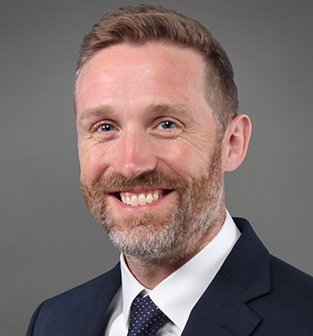
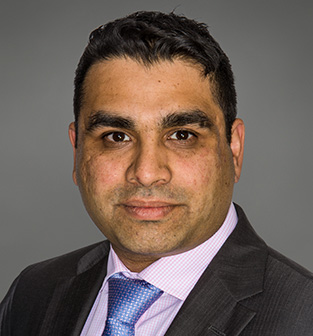
Newton FutureLegacy Investment Team


Bhavin Shah

Portfolio Manager, Multi-Asset and Charities Team

Bhavin joined Newton in June 2011 as a portfolio manager in the mixed assets investment team. Prior to joining Newton, he worked at SG Hambros for seven years where he was responsible for managing client portfolios focused on absolute return and multi-asset strategies. Bhavin is co-lead manager on numerous multi-asset accounts at Newton. In addition to portfolio management responsibilities, Bhavin is a member of the multi-asset Investment Risk Oversight Group. 


Bhavin holds an MSc in Mathematics with distinction and is a CFA charterholder. 


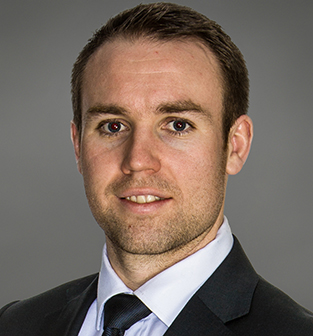
Paul Flood

Head of Multi-Asset and Charities

Paul is Head of Multi-Asset and Charities at BNY Investments Newton. He is also lead manager of the Newton Multi-Asset Diversified Return strategy, the Newton Multi-Asset Income strategy and the Newton Multi-Asset Growth strategy. He also provides leadership and analysis on asset allocation, derivatives and convertible bonds for the wider firm, having spent the earlier part of his career working on strategic asset allocation and derivative strategy. Paul is responsible for generating ideas within alternative assets and has been leading in this area since 2008. He is a member of the macro allocation group and provides feedback to the wider house on strategic and tactical asset allocation.
 

Paul joined Newton in 2004. He is a CFA1 charterholder and has completed the certificate in quantitative finance (CQF) after passing with distinction. Paul studied Astrophysics at the University of St Andrews and is a keen cyclist and runner, having recently cycled the length of the UK from Land’s End to John O’Groats and often participates in marathons.


Martin Chambers

Portfolio Manager

Martin Chambers is a credit research and derivatives analyst, specialising in global investment grade and high-yield bonds across several sectors including financials and utilities. Martin is also part of the team responsible for the management of the Newton Sustainable Global Dynamic Bond strategy. Martin joined Newton in 2010, prior to which he worked at Deloitte, where he qualified as a chartered accountant (ACA) focusing on the insurance and investment management industries. Outside of work, Martin enjoys spending time with his young family and is a keen skier. 


Nancy Last

Senior Portfolio Analyst,
Multi-Asset and Charities Team

Nancy is a senior portfolio analyst working in the Future Legacy team. Nancy, who joined Newton in 2017, initially worked in business control before moving into the portfolio implementation team.
 

Nancy has a first-class degree in business studies from the University of South Wales and has completed the Investment Management Certificate (IMC). Outside of work, Nancy enjoys spending time with family and going on long walks in the countryside.


Paul Byrne

Portfolio Manager

Paul is a member of Newton’s multi-dimensional research team, and works within the quantitative equity team. Paul is a quantitative analyst with a focus on providing analysis to aid portfolio construction and risk management across Newton’s product range, while also being part of the portfolio management team across Newton’s FutureLegacy range and thematic mandates. Paul is also a member of the equity and multi-asset investment risk oversight groups and Investment Oversight Committee.

Newton AUM by investment team


As at 31 December 2025


Notes: 1Excludes £8.6bn of Multi-Asset Solutions assets managed by Newton Investment Management North America LLC (‘NIMNA’).
 

Source: Newton, 31 December 2025. Newton global assets under management (AUM) is the combined total assets under management of Newton Investment Management Limited (‘NIM’) and Newton Investment Management North America LLC (‘NIMNA’) as calculated as at 31 December 2025. In addition, Newton’s global AUM includes assets of bank-maintained collective investment funds for which Newton has been appointed sub-advisor or in limited instances, where Newton personnel act as dual officers of affiliated companies. The AUM includes assets under advisement (AUA) for a model of securities that the Firm does not arrange or effect the purchase or sale of securities.

 Articles

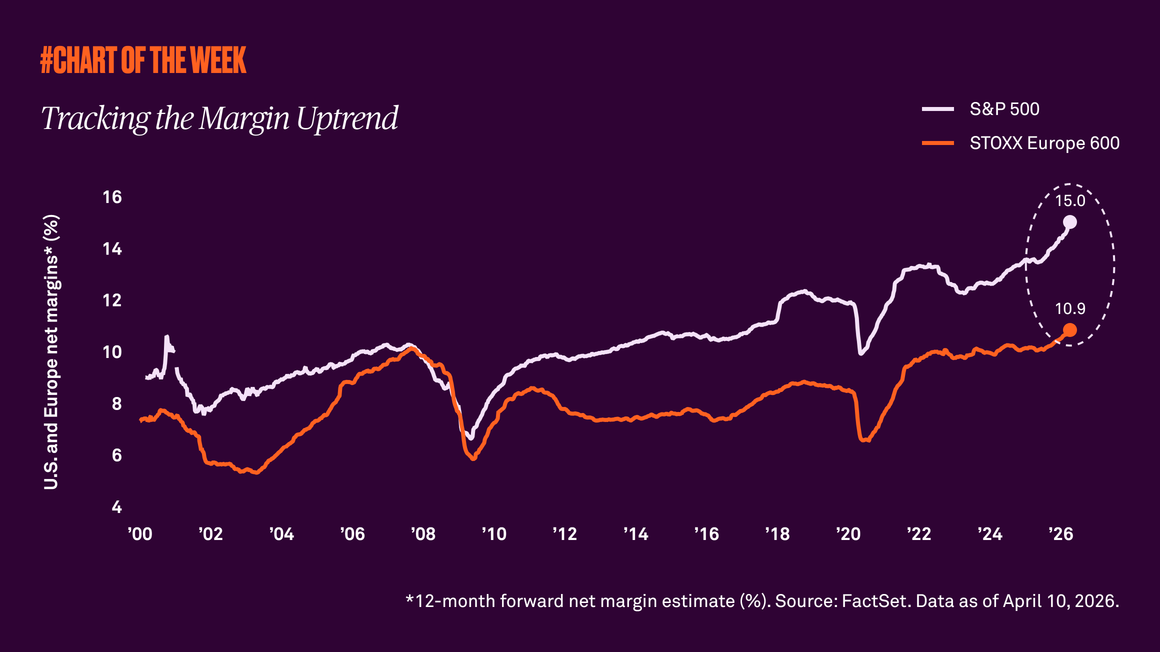
Tracking the margin uptrend
Chart of the week | Macroeconomic

Rising margin expectations continue to support equities, underscoring the resilience of corporate profitability in the face of last year’s tariffs and this year’s Middle East war. The U.S. remains especially strong compared to peers, though first quarter earnings will be an important test.

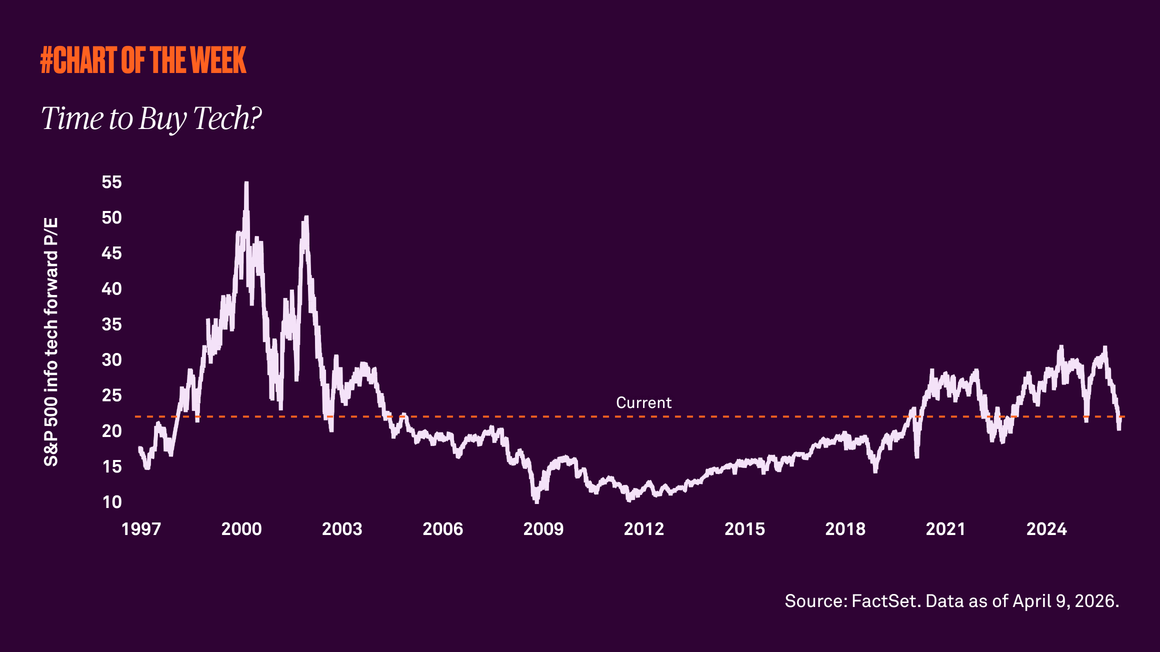
 Time to buy tech?
Chart of the week | Macroeconomic

Technology valuations have meaningfully declined over the past year, but the sector continues to stand out for its strong earnings growth and relative resilience. While near-term uncertainty remains, tech still appears well positioned as a key driver of broader market growth.

Monthly Checkpoints
Reports | Macroeconomic

Checkpoints is a comprehensive monthly chartbook highlighting major top-of-mind themes that could shape financial markets in the near term. In addition to the broader macroeconomic discussion, Checkpoints delivers detailed views on major asset classes, including global equities, fixed income and real assets.

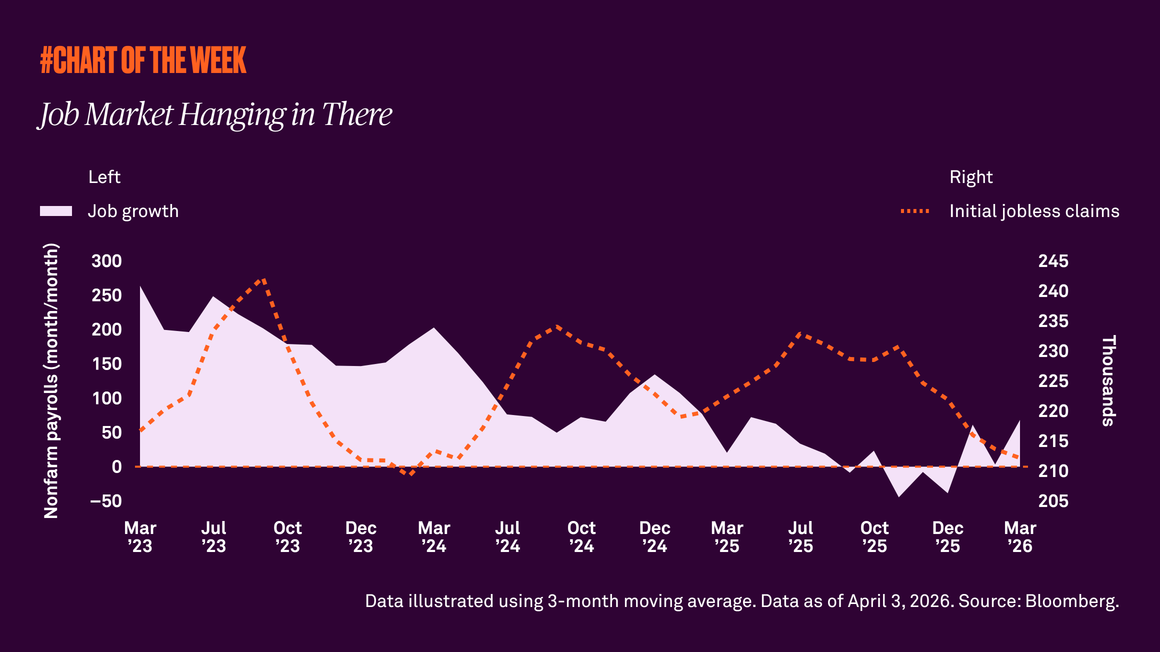
Job market hanging in there
Chart of the week | Macroeconomic

Recent jobless claims data point to a resilient U.S. labor market, with both initial and continuing claims remaining low and signaling that unemployment is still contained. Although job growth has softened and remains subdued, March’s job growth of 178,000, the highest since 2024, is encouraging. Our constructive outlook still holds despite continued uncertainty related to the war in the Middle East.

2484702 Expiry: 30 June 2026

Gathering data
Disclaimer Not Available

This is a marketing communication